SNAPlab

SNAPlab

  • About SNAPlab
  • Books, chapters, articles
  • From the Lab
  • Lectures, Presentations, Conferences
  • Teaching
  • Tools
  • Uncategorized
  • In a World Where TikTok Killed the Cinema Long Ago

    This week and next week I will be attending an AI-focused bootcamp. Thanks to Farshad Einabadi, who is the tutor, it is an incredible experience. One of the most beneficial events in a long time.

    I don’t want to go into details because I don’t understand the AI issues. The course is aimed at beginners and includes programming in Python. In this way, Farshad is showing us how AI works and how we can use AI to create.

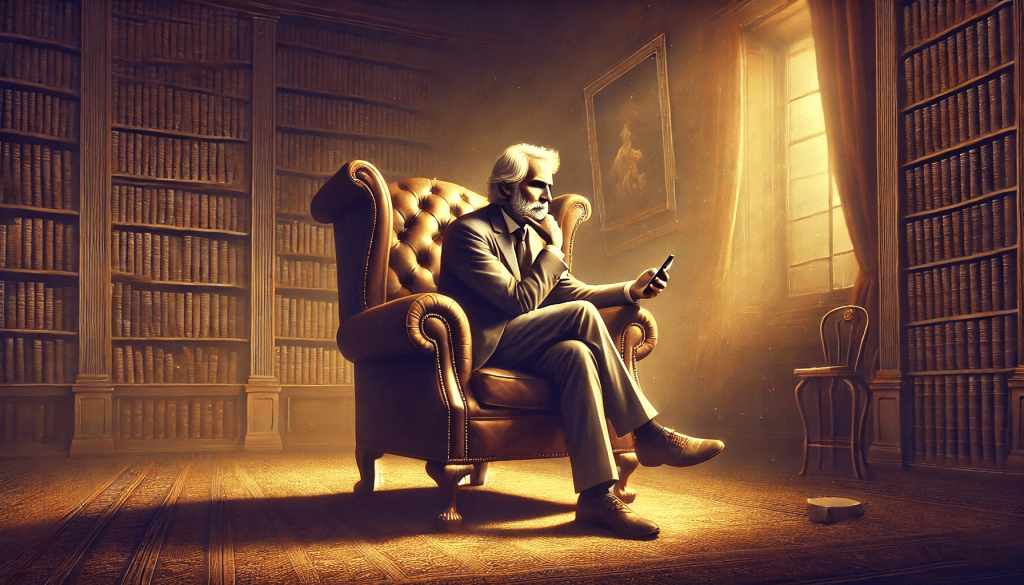
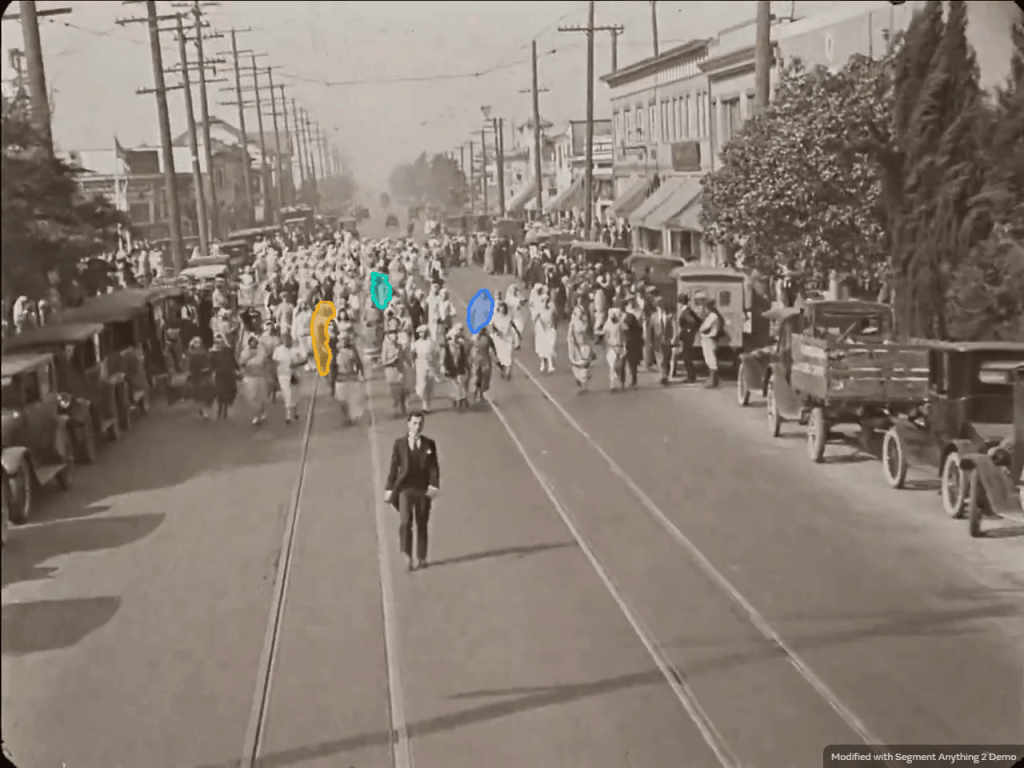
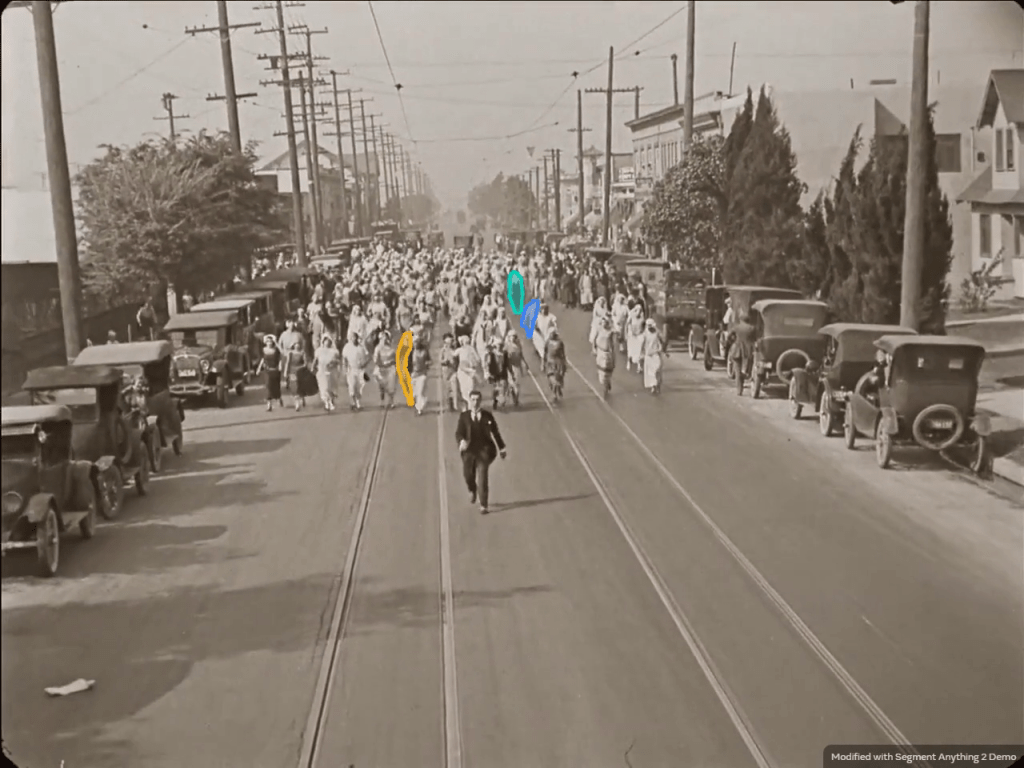
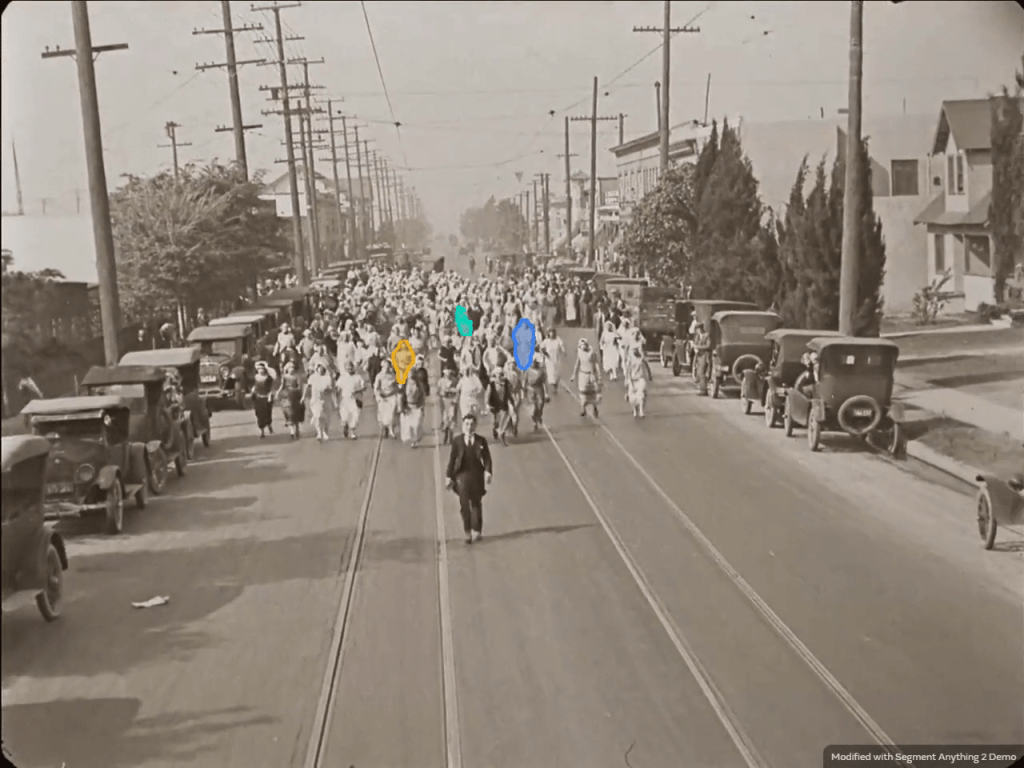
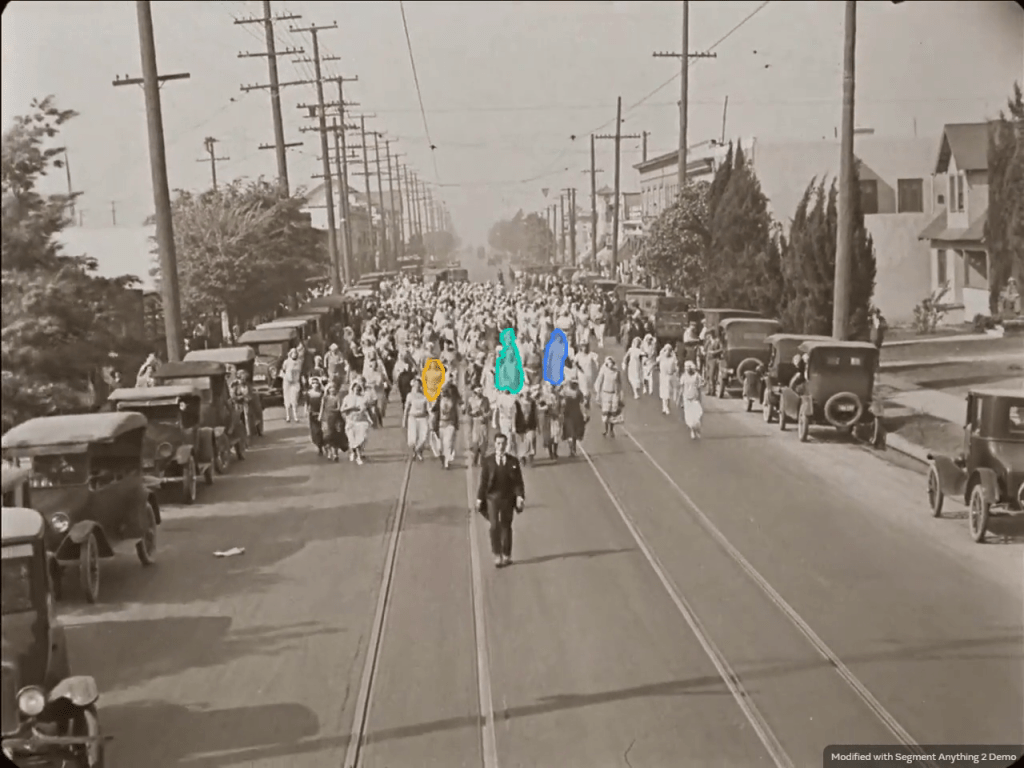
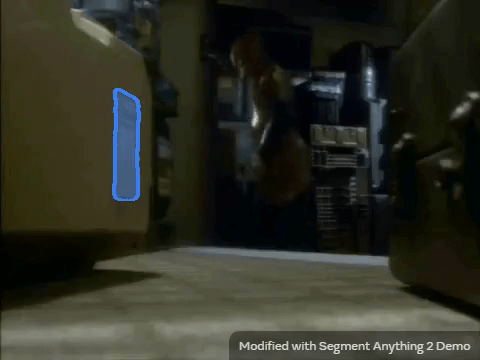
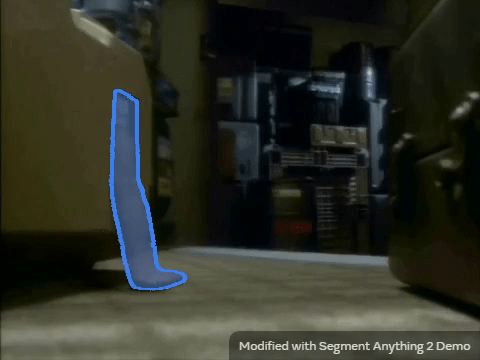
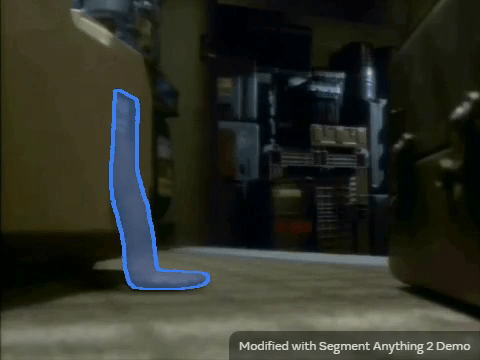
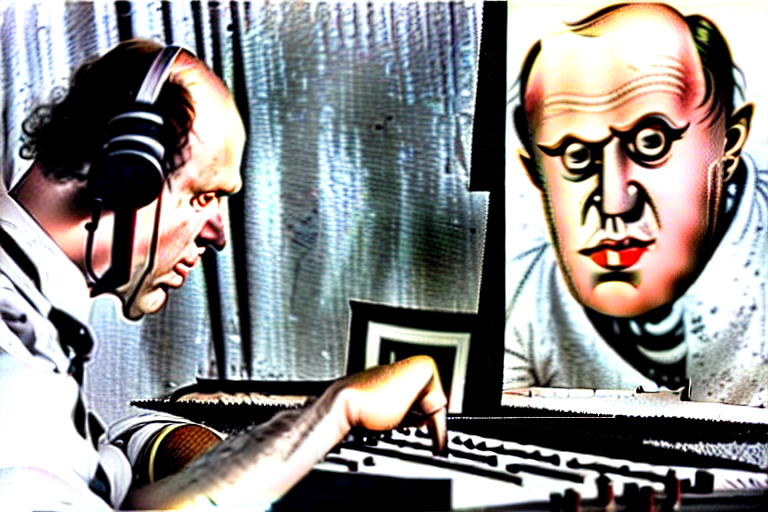
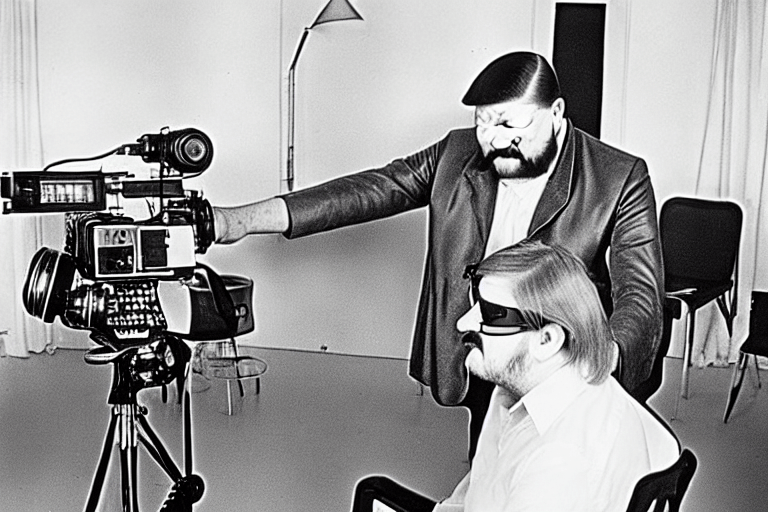
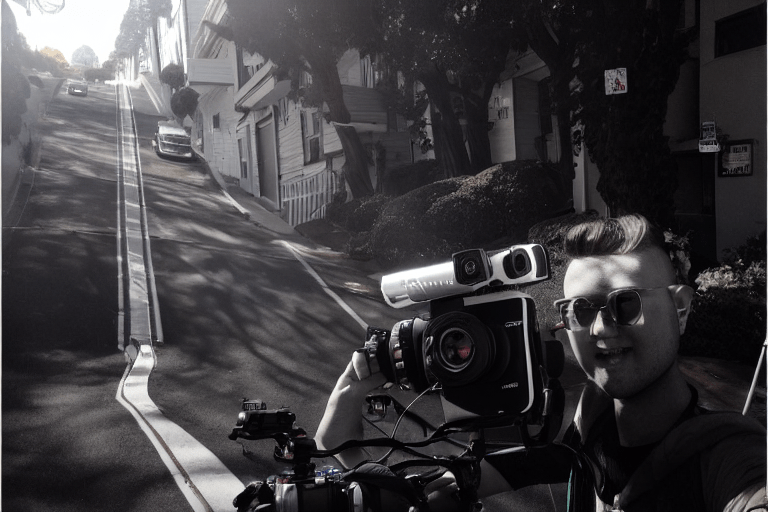
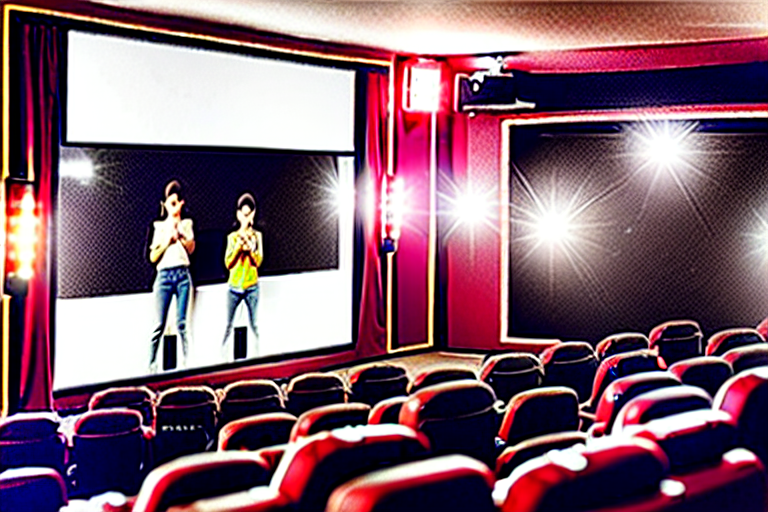
    The first part of the course was about Stable Diffusion and image generation. Below you can see examples of the four images I generated. These are edits of my favorite photos (+ 1 drawing) from the history of cinema. I had them edited to depict a world where films were replaced by TikTok a long time ago.

    Soviet filmmaker Sergei Eisenstein edits his latest TikTok video.

    Rainer Werner Fassbinder shoots his new TikTok video.

    A camera ride during the filming of the TikTok version of Diamonds of the Night (1964).

    And finally, a slightly depressing shot of an empty cinema and two characters watching a mobile phone on screen.

    • About SNAPlab
    • Books, chapters, articles
    • From the Lab
    • Lectures, Presentations, Conferences
    • Teaching
    • Tools
    • Uncategorized

    January 24, 2025
    ai, film history, filmmakers, movies, tiktok

  • The Early Era of TikTok

    When I first installed TikTok a few years ago, I thought to myself that this is something people must have experienced in the early 20th century with film. A new form of audio-visual entertainment that resembles its predecessors, but with slightly different possibilities. Creators have tried to work with the medium with varying degrees of success. The audience succumbs to its charms. Intellectuals are confused.

    Like any historical analogy, of course, this one is inaccurate, but I want to use it to illustrate a research desire that I thought I would have no luck fulfilling. I ask the reader, then, to understand this analogy of TikTok and early cinema more as an evocation of my feelings about the subject of research. It reminded me of something I experienced 16 years ago.

    When I was a film studies student reading the antology of new film history (Nová filmová historie: antologie současného myšlení o dějinách kinematografie a audiovizuální kultury. 2004), I was fascinated by the texts of Thomas Elsaesser, Tom Gunning, and Charles Musser on early cinema. These were translations of older texts into Czech.

    I was fascinated by Thomas Elsaesser’s texts because of the way they managed to overturn my perception of the past. Suddenly, I didn’t understand the films of Lumiere and Porter through the eyes of a film studies student in 2009, but I realised that it was necessary to accept the period context and try to understand the films within it. These were not films at the beginning of cinema history. On the contrary, they were the result of history. From a research point of view, this meant studying literature and archival sources, which accompanied me for the rest of my studies. It was only later that I realised that I didn’t have to try to reconstruct the contexts of the past, and that’s how I got into current audiovisual culture.

    I have always enjoyed reading Tom Gunning’s texts for their myth-busting power. Specifically with the text ‘An Aesthetic of Astonishment: Early Film and the (In)credulous Spectator’ (Art And Text 34, Spring 1989 and many other times), it still fascinates me how he has managed to break out of the decades-old notion of naive spectators. The paradox is that the idea of naivety is still firmly rooted in us, which makes us naive ourselves. Otherwise, we could not think that short videos on the internet are “killing” or “eating” the brains of our children.

    I like Charles Musser’s text ‘The Nickelodeon Era Begins: Establishing the Framework for Hollywood’s Mode of Representation’ (in Early Cinema. Space, Frame, Narrative, ed. T. Elsaesser. 1990) today more out of nostalgia. In terms of the formulation of the research problem and the arguments, I view it very critically today, but I used to give it to students to read despite the difficulties. Its greatest strength, I believe, is in its ability to convey an almost romantic image of film projection in the early era of cinema. However, Musser doesn’t simplify the situation, but instead points out the little details that show the complexity of the early years of film. One of the things that Musser has been focusing on is the composition of programs from different types of film and non-film performances. My colleague Chris Hogg talked about TikTok in a similar way when we spoke in the fall.

    After reading these texts, I have always been a little sad that I will never experience the early era of cinema again. It’s not that the present is qualitatively different in terms of new film history. It was that early cinema was shown in the aforementioned texts as a stage of creative phase, where filmmakers explored a new medium, audiences were getting used to it, and together, from the bottom up, cinema was being made. Today, of course, it is similar with films and TV series. I just kind of get the impression that we all know what we’re doing (though maybe that’s what Porter thought, too).

    TikTok changed that. Suddenly I saw a platform where people with no prior filmmaking or artistic training were staging funny sketches. I saw a platform where different types of performances alternated from trivia and commentary to musical performances to self-help videos. I immediately realized that this must have been how our ancestors must have felt in the early 20th century when they came to nickelodeon. They understood something, they didn’t understand something else, but they were actually having fun. It wasn’t artistic entertainment, but everyone was fascinated. Just like TikTok today.

    • About SNAPlab
    • Books, chapters, articles
    • From the Lab
    • Lectures, Presentations, Conferences
    • Teaching
    • Tools
    • Uncategorized

    January 20, 2025
    cinema, early cinema, film, movie, movies, tiktok

  • Will Talvin (2025) Casual Viewing: Why Netflix looks like that. n+1, issue 49.

    I read an article today that is closely related to an idea for an experiment I had. Adam Ganz pointed me to the text and some of the ideas from the article were mentioned by my colleague Šimon Kulík.

    The author of the article tries to argue that most of the movies on Netflix look like “garbage”, but that no one really cares because viewers only half-watch Netflix (have it running in the background) or don’t watch it at all.

    There are two passages in the article that I find noteworthy. First, a summary of observations on the style and narrative of movies on Netflix. It would certainly be worth examining these further and validating them through formal analysis.

    The other notable idea of the article – expressed only implicitly – is that Netflix is not where it is because of its work with data. That has only come with time. Netflix’s greatest asset is that it can exploit human nature and weaknesses. If in the beginning it was irresistible to rent a DVD without having to return it by the next day (or else one paid a fine), today it is convenient to play Netflix in the background while doing something else.

    But I don’t think this necessarily makes Netflix movies look like “garbage” as the article suggests. Certainly that’s one possibility, if we look at the matter from the filmmakers’ point of view. But what if we look at Netflix from the viewers’ point of view?

    In the past, I’ve repeatedly asked my students how they watch movies, and they’ve admitted to turning on Netflix while watching TikTok. (This two-screen viewing should be the subject of the experiment mentioned at the beginning of this blog.)

    From the perspective of the Casual Viewing article, the cinematic quality of movies on Netflix is deteriorating because viewers aren’t paying attention to them anyway. But then how is it possible that they pay attention to even more garbage on TikTok? (Personally, I wouldn’t say it’s garbage, but if we apply the same criteria to videos on TikTok as we do to Netflix, the conclusion is clear.) How is it possible that we are turning away from low-quality movies on streaming platforms to even lower-quality videos on social media? This kind of viewer behavior doesn’t make sense to me.

    A possible reason is that viewers choose to watch audiovisual content on two screens in parallel for other reasons. The reason may be our desire to absorb information easily, it may be different types of viewing (a background story on TV and a different type of information on a phone). Or there may be other reasons. But I would be careful about saying that Netflix may be deteriorating in quality just because no one is watching it. In fact, we may be witnessing Netflix and TikTok succeeding in exposing our weakness without us even realizing it.

    • About SNAPlab
    • Books, chapters, articles
    • From the Lab
    • Lectures, Presentations, Conferences
    • Teaching
    • Tools
    • Uncategorized

    January 15, 2025
    movies, netflix, streaming, two-screens

  • D. Bondy Valdovinos Kaye, Jing Zeng, Patrik Wikström (2022) TikTok. Creativity and Culture in Short Video

    Reading this book made me think of all my academic colleagues who are prejudiced against social networks and TikTok in particular. Without bias, in a descriptive, even rigorous way, and with respect to different contexts, a phenomenon that touches the lives of hundreds of millions of people around the world is presented here. Thanks to the authors, the reader can gain fundamental information and understand how TikTok works through concrete examples.

    The book’s chapters cover the historical development of short videos on the Internet, TikTok’s infrastructure as a platform, communities, activism, economic model, governance, and finally, they consider the future of TikTok as a creative platform. The research then takes as its source interviews with short video creators and community members.

    However, I was most interested in what the authors of the book had to say about the formal aspect of the videos and about TikTok users. There wasn’t a lot, but that’s understandable because that wasn’t their goal either. I could summarize the essential thesis for a successful video form as follows:

    – emphasis on the music element

    – platform supported practices: Duet, Stich, Use this Sound, effects and filters

    – more showing than telling

    – repetition of some successful formal practices (face zoom, panoramic shot)

    As I wrote, it’s not much and not fundamentally revelatory, but I still find these insights refreshing. At least because the authors have avoided the traditionally repeated claim that TikTok is fast, which I don’t think is true (I’ll discuss that another time).

    One of the main theses of the book (its starting point rather than its conclusion) is the understanding of TikTok as a music platform. Despite the book’s focus on short videos, the music component is clearly a priority for the authors. On the one hand, this is understandable, as TikTok has a predecessor in Musica.ly and the Duet and Use this Sound features clearly indicate a relationship to music. On the other hand, however, this misses out on understanding the phenomenon of short videos in their complexity. This is similar to film theorists focusing only on the visual component (as they did and still do). Especially from an audience perspective, I can imagine watching TikTok videos without sound. Why else would the videos have subtitles with transcripts of monologues and dialogue?

    A notable observation in this context is the reminder of the Quibi platform, which was supposed to be a competitor to TikTok more connected to the American audiovisual industry. Quibi ended up being a huge failure and losing a lot of money, which the authors of the book justify by saying that short videos are not just about audiovisual content that is short. Short videos are mainly about cultural practice, creative expression and social interaction (p. 192). In other words, it is not about Hollywood studios and TV stations trying to push their content onto TikTok. If the traditional audiovisual industry sees TikTok as competition, it will have to transform and adapt its output. It’s not enough to just shorten the footage and crop the frame. Inspiration from TikTok needs to look different.

    The authors of the book sum up the magic of TikTok’s success with the words “spreadable, templatable, imitable” (p. 192). Elsewhere in the book, they write about replicability (p. 18) and repeatedly refer to memes (p. 163: TikTok is described as a “meme machine”). These are, in my opinion, the main reasons for TikTok’s success in proving to be an extremely effective tool for spreading viral videos. But this is not an evolutionist conception of memetics, as described, for example, by Daniel Dennett in his book From Bacteria to Bach and Back (I will also discuss this another time). Kaye, Zeng and Wikström keep their feet on the ground and describe the memetic principle of TikTok as more of a community process of group creation, but one that still has its authors and recipients. Perhaps if we could get away from this schematic model of communication, we could understand what TikTok and short videos really entail.

    • About SNAPlab
    • Books, chapters, articles
    • From the Lab
    • Lectures, Presentations, Conferences
    • Teaching
    • Tools
    • Uncategorized

    January 9, 2025
    book, tiktok

  • About SNAPlab

    My name is Jan and I promised to write this blog as a popularisation output of my research project. For the next two years, I will be conducting research at Royal Holloway, University of London on how the behaviour of film and TV series viewers changes under the influence of short videos on social media – typically TikTok, Instagram Reels and YouTube Shorts.

    Ironically, I deliberately unsubscribed from social media in the autumn of 2018. I occasionally install one to familiarise myself with how it works, but as soon as I realise I’m spending more time on it than is healthy, I uninstall the app and delete my account. Now I finally have a sensible reason to spend all my time on social media.

    The research project ‘Shortform Narratives, Audiences and Perception’, with the acronym SNAP (hence the blog title), was written for the European Commission’s MSCA PF call. Eventually, funding was secured from the Operational Programme Johannes Amos Comenius under the identifier 02_22_010 MSCA Fellowships CZ.

    The supervisor is Adam Ganz. The project was made possible thanks to the kind support of people from the Department of Media Arts, the Department of Psychology and Storyfutures, who I will be introducing here in the coming weeks.

    I have started several blogs in the past, but none have lasted more than a few months. Thanks to the commitment of the project, I now have the confidence that SNAPlab will last at least two years.

    • About SNAPlab
    • Books, chapters, articles
    • From the Lab
    • Lectures, Presentations, Conferences
    • Teaching
    • Tools
    • Uncategorized

    January 9, 2025

Previous Page
  • About SNAPlab
  • Books, chapters, articles
  • From the Lab
  • Lectures, Presentations, Conferences
  • Teaching
  • Tools
  • Uncategorized

This work was supported from OP JAC Project “MSCA Fellowships at Palacký University III.” CZ.02.01.01/00/22_010/0008685, run at Palacký University in Olomouc, Czech Republic. 

Blog at WordPress.com.


Loading Comments...
 

    • Subscribe Subscribed
      • SNAPlab
      • Already have a WordPress.com account? Log in now.
      • SNAPlab
      • Subscribe Subscribed
      • Sign up
      • Log in
      • Report this content
      • View site in Reader
      • Manage subscriptions
      • Collapse this bar