
On Thursday, September 17, Adam Ganz and I organised the symposium See What I Mean? at Royal Holloway.
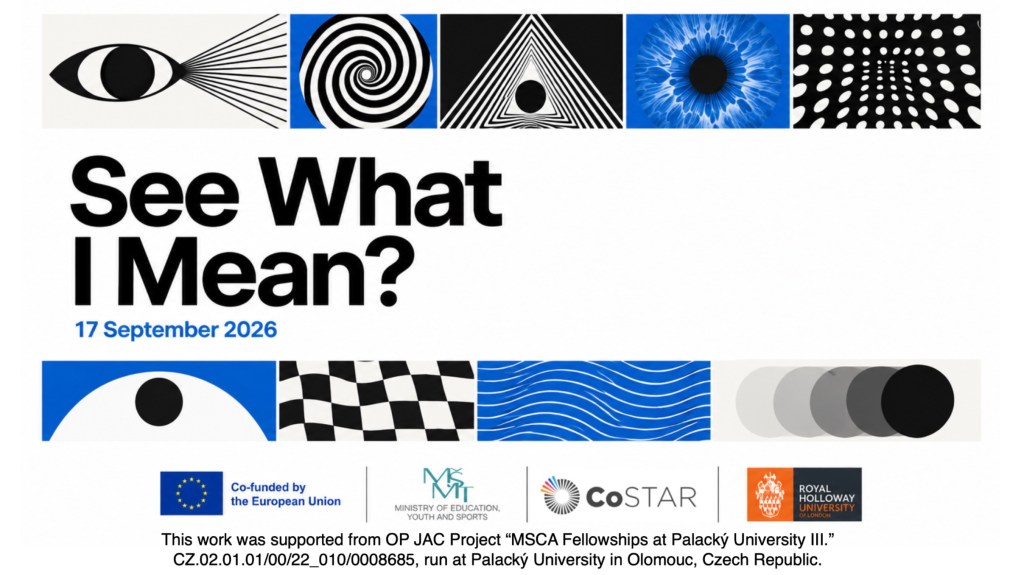
The event was, to some extent, a retrospective of our concluding research project, but also an encouragement for future collaboration.
Over the past two years, Adam was the supervisor of my postdoctoral research project, Shortform Narrative, Audience and Perception. Beyond lab work and writing articles, Adam and I spent significant time discussing the conceptual understanding of audiovisual narrative. Today, thanks to cognitive science and devices such as eye-trackers and EEG, we know much more about film audiences. We know a lot about viewers’ gaze patterns, and we know that films can, to some extent, synchronise the brain activity of the audience.
From my perspective, this means we need to reconsider the role of traditional film scholars. Adam, however, has always remained confident in the humanist approach during our conversations. Therefore, this symposium served as an opportunity to think through how the conceptual approach in film studies can be combined with the empirical, data-driven approach of cognitive science.
We invited professionals from various fields to discuss the topic of narrative in audiovisual media. Our ambition was to bring together filmmakers, cognitive scientists, AI researchers, philosophers, and film and media scholars.
Participants: Peter Hall, Rajesh Thind, Claude Heath, Felix Carter, Iain Gilchrist, Yi-Zhe Song, Tim Smith, Angela Chan, Mohammad Namazi, Olga Goriunova, Szonya Durant, Polly Dalton, Helen Littleboy, Mandy Merck, Aleks Rydzkowska, Paulina Brosz, Haiou Zhu, Adam Ganz, and Jan Černík.
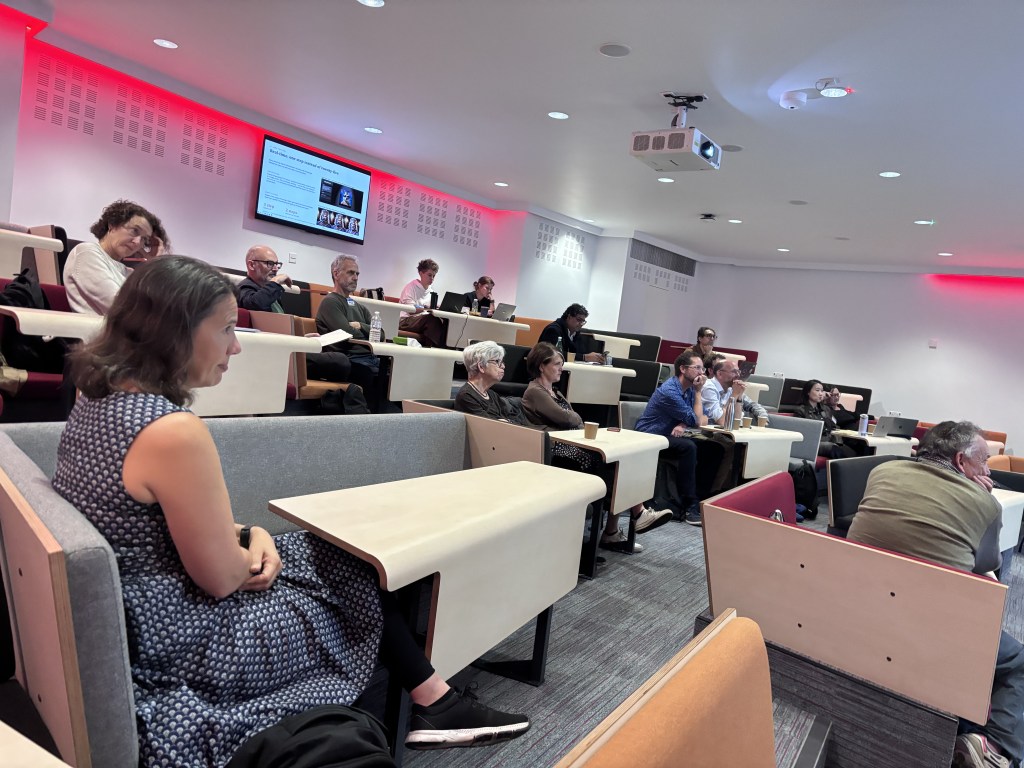
Although some invited guests – Catherine Grant, Murray Smith, Marina Iosifyan, Tomáš Jirsa, and Walter Murch – unfortunately couldn’t make it to Egham, their presence was still felt in our discussions.
Before the symposium, we asked everyone to read a selection of texts:
- Jerome Bruner: The Narrative Construction of Reality
- Carlo Ginzburg: Roots of a Scientific Paradigm
- Walter Murch: In the Blink of an Eye
We also asked them to watch the video essay Visual Disturbances by Eric Faden (which was recommended for the event by Catherine Grant).
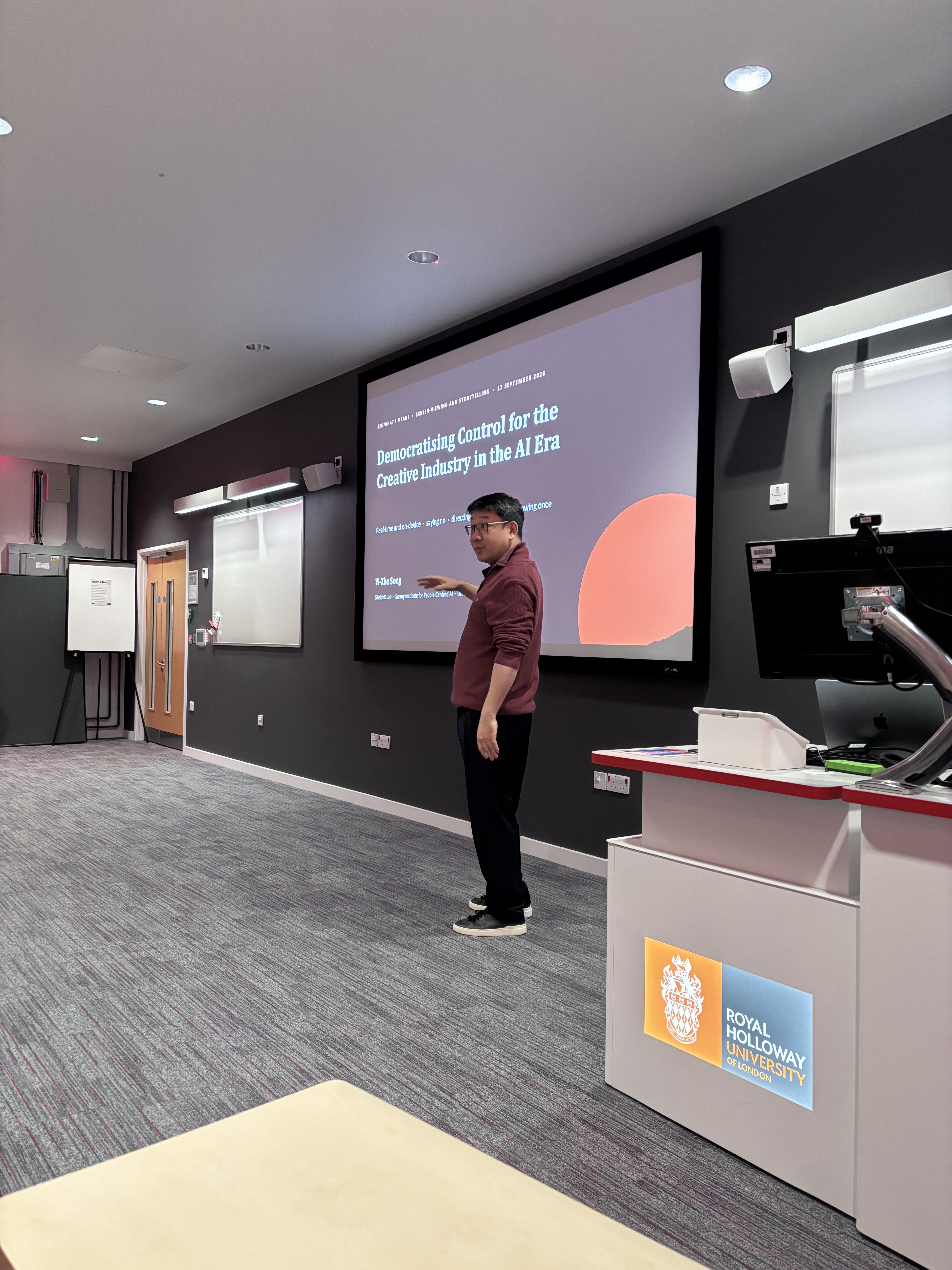
With this foundation, we opened the day with three talks: Szonya Durant (on eye-tracking and how we perceive films), Yi-Zhe Song (on the latest developments in AI image and video generation), and Adam Ganz (on the role of narrative in all of this).
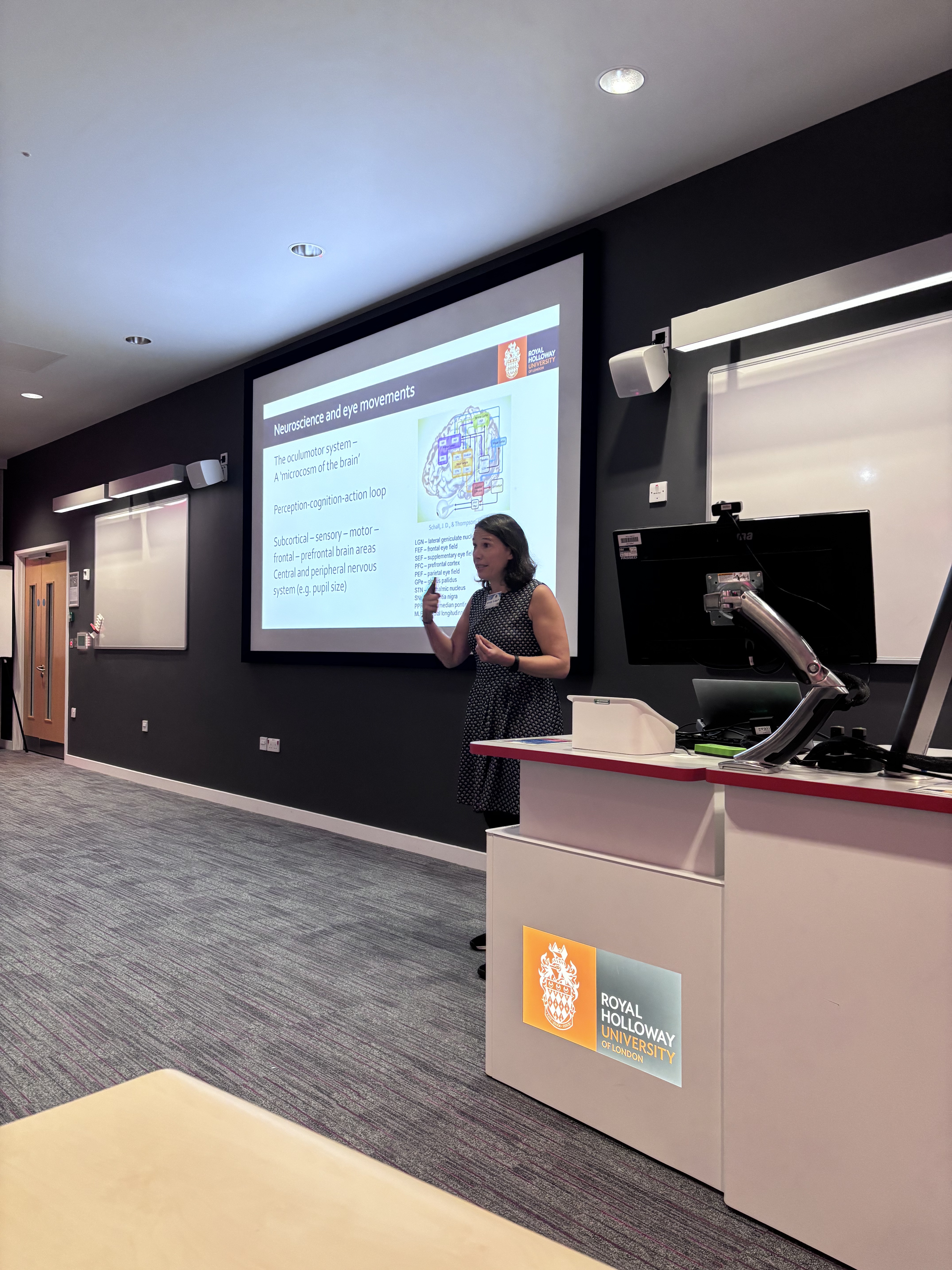
Afterward, Szonya Durant invited attendees to try eye-tracking for themselves. Volunteers watched a clip from Ruben Östlund’s Turist (2014) and then compared their gaze patterns with one another.
In the afternoon, the symposium continued with group discussions.
At the end of the day, my main takeaway was that when exploring narratives in audiovisual media, we cannot remain in the silo of a singular discipline. An interdisciplinary framework is absolutely necessary. The real-time prompting and video generation presented by Yi-Zhe Song is a technological marvel, but integrating narrative would make it even stronger – whether in terms of our narrative understanding of the real world, or as a tool for storytelling.
Sometimes people question whether the humanities have a future. If they do, I am convinced it lies in interdisciplinary research, because it is as enlightening as it is entertaining.
Some participants mentioned initiatives I want to highlight here:
- Tim Smith talked about The Society for Cognitive Studies of the Moving Image (SCSMI), which fosters interdisciplinary research bridging moving image theory, cognitive science, and philosophy.
- Peter Hall introduced The Visual Intelligence in Arts and Humanities Network (VIAHN), which supports collaborations and grants between Arts & Humanities and STEM.
 SNAPlab
Leave a comment