
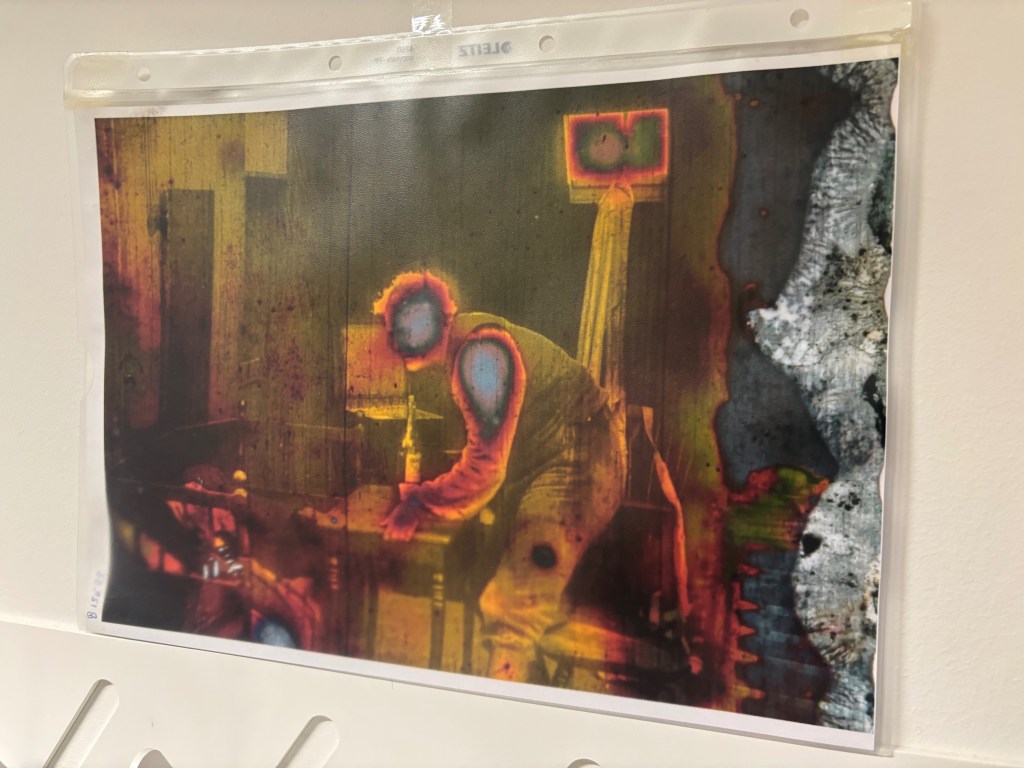
This year’s annual conference of the Society for Cognitive Studies of the Moving Image (SCSMI) takes place at Vrije Universiteit Amsterdam. I am attending this conference for the first time, and after the first day, I am incredibly excited. In the morning, we visited the Eye Film Archive, where we had a wonderful tour. For some reason, people in our group were very curious about nitrate film stock, so we were shown how nitrates are stored and what it looks like when they decay. I noticed that, at a certain stage, the decay looks strikingly similar to eye-tracking heatmap visualizations. Which also serves as a segue from the archive to cognitivism!
Later at the conference, I attended several panels. First an interesting presentation by Joe Magliano on his empirical research into plot density and memory for serialised narratives. Joe mentioned that plot density correlates with arousal, which in turn affects memory. I definitely want to address this topic in a paper we are currently preparing on the recall of ambient TV during dual-screen viewing of television and TikTok.
Another fascinating paper was presented by Peter Kapritsias, who talked about awe and how it relates to visual edge quality in animated films. I really appreciated that Peter is both an artist and a researcher, and I loved how he seamlessly combined the phenomenological level with empirical evidence.
However, there were two absolute highlights of the first day. The first was a presentation by Jonathan Frome – or, rather, the discussion that followed it. Jonathan criticized the field of cognitive film studies for its inability to reject certain theories, specifically focusing on Noël Carroll’s theory of erotetic narration. (Jonathan published a paper on Carroll’s theory in 2020, to which Carroll responded in 2024). While I don’t want to go into the details of the criticism of the erotetic theory itself, Jonathan’s broader point is highly relevant. In our field, and many others field, there are people who believe in “pure theories” that exist outside the real world, entirely disconnected from empirical evidence. I’ve had these conversations many times and I am often unsure how to approach them. For obvious reasons, it is impossible to argue against this kind of pure theory: without empirical evidence, and sometimes even without the rules of basic logic, there is simply no way to prove it wrong. In my experience there are people like Jonathan, who actively fight against this, and those who simply ignore theories that cannot be operationalised and tested.
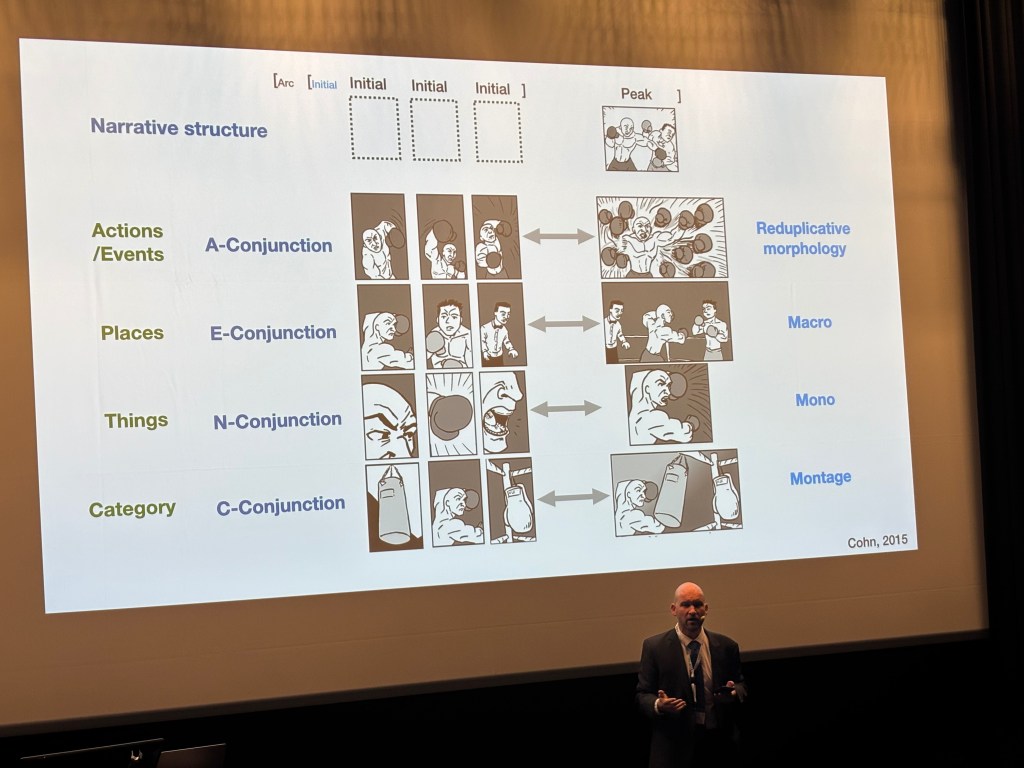
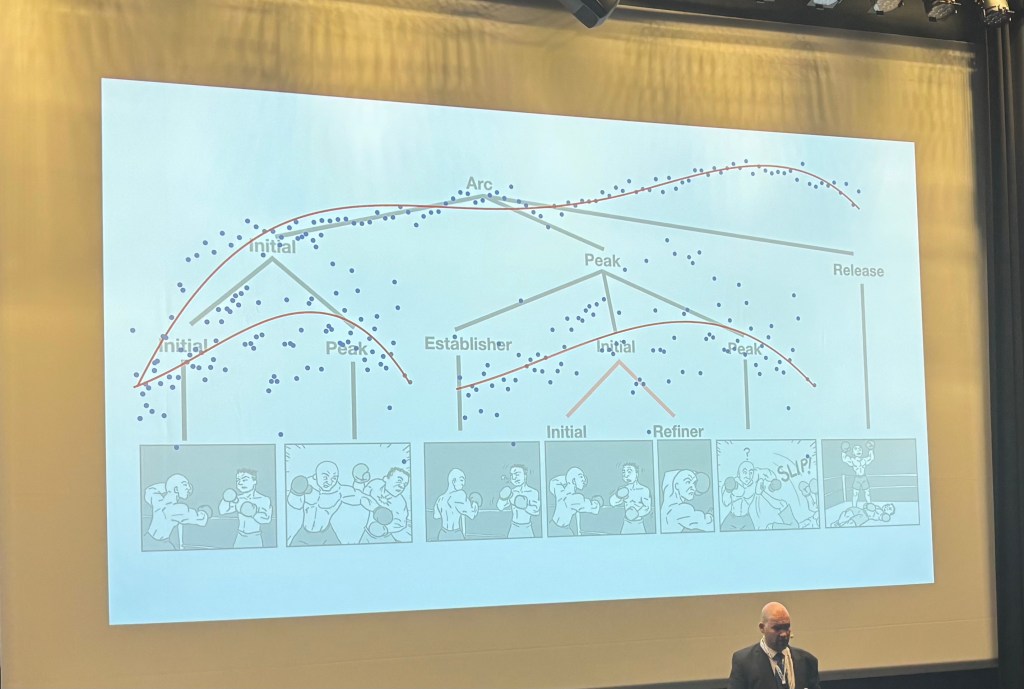
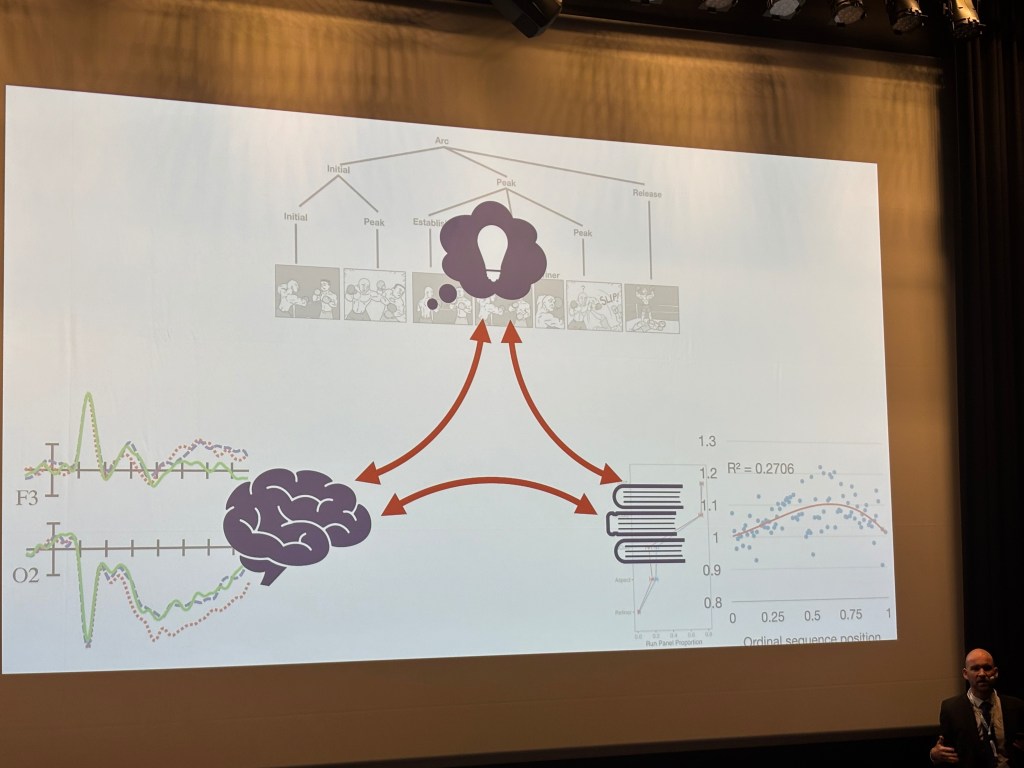
The second highlight was the keynote speech by Neil Cohn. It was simply fascinating. In just one hour, Neil walked us through his narrative grammar of visual storytelling. Despite its long history, I honestly thought the concept of visual grammars was dead, but Neil proved me wrong. He combined EEG data with corpus analysis to describe a theory that sounds incredibly solid. And not just for comics, which is his primary area of research, but for cinema as well. I will definitely be reading his book and following his future research.


Leave a Reply